AI Systems in 2026: How Artificial Intelligence Is Transforming Technology
Artificial intelligence has become one of the most important technologies shaping the digital world. In 2026, AI systems are becoming more capable, efficient, and deeply integrated into everyday technology. From business automation and cybersecurity to healthcare, education, software development, and content creation, AI is changing how people and organizations work.
Unlike earlier AI applications that were designed to perform specific tasks, modern AI systems can understand complex information, generate content, analyze data, interact with users, and assist with multi-step workflows. This evolution is making AI systems an increasingly important part of modern digital infrastructure.
What Is an AI System?
An AI system is a technology designed to perform tasks that normally require human intelligence. These tasks can include understanding language, recognizing images, analyzing information, making predictions, generating content, and supporting decision-making.
Modern AI systems typically combine machine learning models, large datasets, computing infrastructure, software applications, and user interfaces. Together, these components allow AI to process information and produce useful results.
AI Systems in 2026
In 2026, AI systems are moving beyond simple chatbots and basic automation. Businesses and technology platforms are increasingly using AI to support complex workflows and improve productivity.
Modern AI systems can help organizations:
- Analyze large amounts of data
- Automate repetitive tasks
- Generate text, images, audio, and video
- Assist with software development
- Detect potential security threats
- Improve customer support
- Personalize digital experiences
- Support business decision-making
This broader adoption is making AI a fundamental component of many digital products and services.
Generative AI and AI Systems
Generative AI remains an important part of the AI ecosystem in 2026. These systems can create new content based on user instructions, including written content, software code, images, presentations, and other digital materials.
Generative AI is being used by developers, marketers, designers, researchers, educators, and businesses to accelerate creative and technical workflows.
However, human review remains important because AI-generated information can contain errors, outdated information, or misleading results.
AI Agents and Automated Workflows
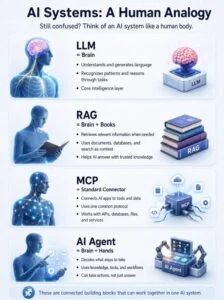
One of the major developments in AI systems is the growing use of AI agents. These systems are designed to perform multiple steps toward a goal rather than simply responding to a single question.
For example, an AI agent may analyze information, organize data, use connected software tools, and prepare an output based on a user’s instructions.
This can make AI systems useful for business operations, research, customer service, programming, and administrative tasks.
AI in Business
Businesses are increasingly integrating AI into everyday operations. AI systems can help organizations analyze customer behavior, automate workflows, improve communication, and identify patterns in large datasets.
Small businesses can also use AI tools for content creation, customer support, marketing research, data analysis, and productivity.
The effectiveness of AI implementation depends on factors such as data quality, system reliability, security, employee training, and the specific business problem being addressed.
AI and Cybersecurity
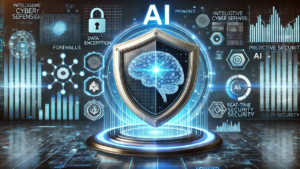
Cybersecurity is another important area for AI systems in 2026. AI can analyze large volumes of network and system activity to identify unusual patterns and potentially suspicious behavior.
Security teams can use AI-assisted systems to prioritize alerts, analyze threats, detect anomalies, and support incident response.
At the same time, AI can also be used by attackers to create more sophisticated scams and automated attacks. This creates a continuing need for strong cybersecurity practices, monitoring, authentication, and human oversight.
AI in Healthcare
AI systems are also being developed for healthcare applications. They can assist with medical research, data analysis, administrative processes, and the interpretation of certain types of medical information.
AI should not automatically replace qualified healthcare professionals. Instead, properly designed systems can serve as decision-support tools while human experts remain responsible for important clinical decisions.
AI in Education
Education is another field being influenced by AI technology. AI systems can provide personalized explanations, generate learning materials, assist with research, and help students practice different subjects.
Teachers can also use AI to support lesson planning and administrative tasks. However, educational institutions need clear policies to address accuracy, academic integrity, privacy, and responsible AI use.
Challenges of Modern AI Systems
Despite rapid progress, AI systems still face important challenges. Accuracy, privacy, cybersecurity, transparency, bias, copyright, and responsible use remain major concerns.
AI models can sometimes produce incorrect or misleading information with a high level of confidence. Organizations therefore need appropriate testing, monitoring, human oversight, and governance before deploying AI in important applications.
The Future of AI Systems
The future of AI systems is likely to involve deeper integration with software, cloud platforms, smartphones, business applications, and other digital technologies.
As AI becomes more capable, the focus is shifting from simply generating information to helping users complete practical tasks. This could lead to more intelligent software that can understand context, coordinate multiple actions, and adapt to different workflows.
The development of responsible AI will also remain important. Organizations will need to balance innovation with privacy, security, reliability, transparency, and human control.
Conclusion
AI systems in 2026 represent a major stage in the development of artificial intelligence. They are becoming more capable of understanding information, generating content, automating workflows, and assisting people across many industries.
The technology offers significant opportunities, but successful adoption requires responsible implementation, reliable data, strong security, and appropriate human oversight. As AI continues to evolve, it is likely to remain one of the most influential technologies shaping the future of the digital world.